
A Day in the Life of a Junior Civil Judge (JCJ)
The 17.5 hour daily routine of Junior Civil Judges working in AP and Telangana.
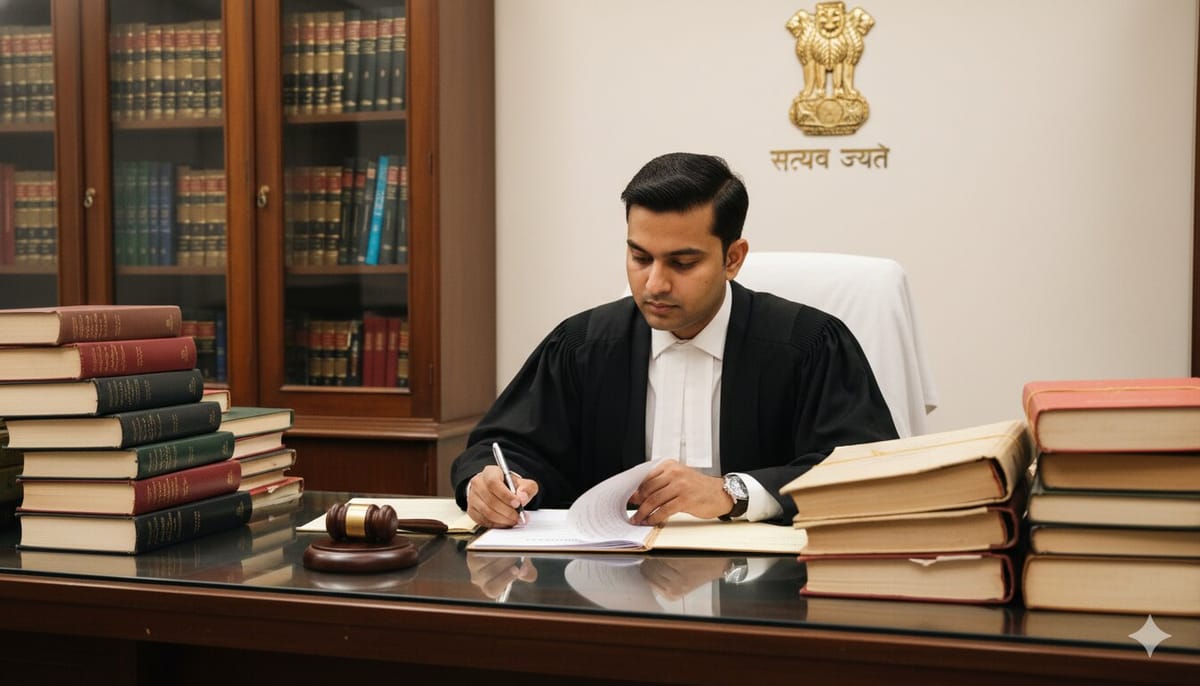
Through my work, I keep meeting several judges, advocates, standing counsels, government pleaders, public prosecutors and many more persons. This is the story of a Junior Civil Judge.
A Junior Civil Judge position is the most coveted among fresh LLB graduates as it requires only 3 years of practice to be eligible. It is said that while there is competition, it is substantially less than exams like UPSC or Groups as the LLB degree is a pre-requisite.
This is the true story of a Junior Civil Judge. It was incredible to interact with him, he was calm and down to earth. It was nothing like the Judges of the yesteryear movies.
Upon discussing several things, we discussed the daily routine and this is what I found. This was something I was not expecting. The life of a judge is not 9-5. It is incredibly taxing.
The Daily Routine of a Junior Civil Judge
| 🕒 Time | 📝 Activity |
|---|---|
| 10:30 a.m. – 1:00 p.m. | Court proceedings |
| 1:00 p.m. – 2:00 p.m. | Remand matters |
| 2:00 p.m. – 2:30 p.m. | Lunch break |
| 2:30 p.m. – 5:00 p.m. | Court resumes |
| 5:00 p.m. – 6:00 p.m. | Remand work continues |
| 6:00 p.m. – 6:30 p.m. | Administrative work & initial judgment drawing |
| 6:30 p.m. – 7:00 p.m. | Commute back home |
| 7:00 p.m. – 7:30 p.m. | Personal time with family |
| 7:30 p.m. – 9:30 p.m. | Reading and preparing next day's case files |
| 9:30 p.m. – 10:00 p.m. | Dinner |
| 10:00 p.m. – 1:00 a.m. | Drafting judgments |
| 1:00 a.m. – 2:00 a.m. | Call from hospital: Prepare to record dying declaration |
| 2:00 a.m. – 3:00 a.m. | Coordination with police and travel to hospital |
| 3:00 a.m. – 5:00 a.m. | Record dying declaration at hospital |
| 5:00 a.m. – 8:30 a.m. | Return and sleep |
| 8:30 a.m. – 9:30 a.m. | Wake up and get ready |
| 9:30 a.m. – 10:30 a.m. | Commute to court |
I noted these down from memory so there maybe slight inaccuracies.
The Numbers Don't Lie: Breaking Down a Judge's Life
Let's analyze what this schedule really means:
Work Hours
- Court hours: 10:30 a.m. to 6:00 p.m. = 7.5 hours
- Commute time: 1 hour daily (30 minutes each way)
- Case preparation at home: 7:30 p.m. to 9:30 p.m. = 2 hours
- Judgment drafting: 10:00 p.m. to 1:00 a.m. = 3 hours
- Emergency work (dying declaration): 1:00 a.m. to 5:00 a.m. = 4 hours
Total working hours on this particular day: 17.5 hours
Even on a "normal" day without emergency calls, the judge works approximately 13.5 hours, with only 3.5 hours of sleep when emergencies arise.
Personal Time
- Family time: 30 minutes (7:00 p.m. to 7:30 p.m.)
- Dinner: 30 minutes
- Sleep (on emergency days): 3.5 hours
- Sleep (on regular days): ~6-7 hours
The Reality of Judicial Service
No Real Leaves: While judges are entitled to leave on paper, the reality is different. Cases pile up, pendency increases, and taking leave often means returning to an overwhelming backlog. The system doesn't pause when you're away. This is why Judges do not get much leave.
Always On Call: As this schedule shows, a judge can be called at 1:00 a.m. to record a dying declaration. Medical emergencies, urgent remand matters, and critical cases don't follow office hours. This is rotational so different judges keep getting this shift.
Mental and Physical Toll: Reading case files, drafting judgments, handling remand matters, administrative work—all while maintaining judicial objectivity and ensuring justice is served. The pressure is immense. This is usually fun for the judges as they love their work, but if you are considering a career in judiciary, this is something you should know.
Limited Family Time: Notice the 30 minutes of "personal time with family" in this schedule. That's the reality. Birthdays, anniversaries, children's school events—everything takes a backseat to the demands of justice.
Social Restrictions: Judges cannot move around freely in society like ordinary citizens. They must maintain a certain distance from social gatherings, avoid certain places, and be extremely careful about their associations. The fear of compromising judicial impartiality means living under constant scrutiny. Simple pleasures like attending a friend's party, going to a public event, or even casual socializing become complicated when you wear the black robe.
I heard this story about a friend of a High Court Judge. They, along with their families went to Tirumala together. After darshan of the Lord Balaji, they returned to their respective rooms. When they returned, there were several expensive saris kept in the room of the friend of the Judge. This was obviously a way to gain favour with the Judge. They left the Saris in the room and left. They do not show their friendship in public after that day. These are real world practical challenges of being a judge.
My Perspective: The Hidden Cost of Prestige
While a judgeship is considered prestigious by many, one must not take lightly the responsibility that comes with it and the amount of work it entails. The reality is not known to everyone, and one ought to be aware of it before pursuing this path.
The prestige is real—the respect, the authority, the power to deliver justice.
This article isn't meant to discourage anyone from becoming a judge, but to present the complete picture. Too often, we see only the glory and miss the grind.
If you still want to be a Judge, Go for it
In conclusion, all I can say is that, if you still feel that you want to be a judge and you understand the kind of work that is to be done, go for it.
The judiciary is often romanticized, the power, the respect, the black robe. But the reality is:
- 17.5-hour workdays are not uncommon
- Emergency calls at 1:00 a.m. are part of the job
- No work-life balance in the traditional sense
- Constant pressure of pending cases and judicial accountability
- Minimal family time and personal life
Being a judge is not just a job, it's a calling that demands everything from you. It requires sacrifice, dedication, and an unwavering commitment to justice, often at the cost of your own well-being and family life.
Having read this article, some might feel that being an advocate might be easier but there are several advocates who have roaring practices that also work 14-17 hours every single day. Even weekends are working for most advocates.
Prithvi Raj Kunapareddi
Founder
1516